Reference Page:
Bibliography For SP 410: Sex and Media
Attwood, F. (2005). Fashion and passion: Marketing sex to women. Sexualities, 8(4), 392-406.
Attwood, F. (2005). Tits and ass and porn and fighting: Male heterosexuality in magazines for men. International Journal of Cultural Studies, 8(1), 83-100.
Banks, J. (2003). Prurient Interests: Sexuality, Ideology, and Popular Communication. Popular Communication, 1(1), 5-13.
Berkowitz, D. (2006). Consuming eroticism: Gender performance and presentations in pornographic establishments. Journal of Contemporary Ethnography, 35(5), 583-606.
Brooks, G. (1999). The centerfold syndrome. In S. Maasik & J. Solomon (Eds.), Signs of life in the USA: readings on popular culture for writers (438-447). Boston: Bedford Press.
Brown, J. (2002). Mass media influences on sexuality. Journal of Sex Research 39(1), 42-46.
Collins, R.L., Elliott, M.N., et al. (2003). Entertainment television as a healthy sex educator: The impact of condom-efficacy information in an episode of Friends. Pediatrics, 112(5), 1115-1121.
Coon, D. R. (2005). Two steps forward, one step back: The selling of Charlie’s Angels and Alias. Journal of Popular Film and Television, 33(1), 2-11.
Davidson, A. & Wallack, L. (2004). A content analysis of sexually transmitted diseases in the print news media. Journal of Health Communication, 9(2), 111-118.
Dempsey, J.M., & Reichert, T. (2000). Portrayal of married sex in the movies. Sexuality & Culture, 4(3), 21-37.
Dennis, J. (2003). “Signifying same-sex desire in television cartoons. Journal of Popular Film & Television, 31(3), 132-141.
Dworkin, A. (1992). Against the male flood: censorship, pornography, and inequality. In C. Itzin (Ed.), Pornography: Women, Violence, and Civil Liberties (515-535). London and New York: Oxford University Press.
Hartley, N. (1997). In the flesh: a porn star’s journey. In J. Nagel (Ed.), Whores and other feminists (57-65). New York: Routledge.
Hubbard, R. (2000). The social construction of sexuality. In P. Rothenberg (Ed.), The social construction of difference: Race, gender, class and sexuality (64-67). NY: Worth Publications. (Original work published 1990)
Hunt, A. & Curtis, B. (2006). A genealogy of the genital kiss: Oral sex in the twentieth century. The Canadian Journal of Human Sexuality, 15(2), 69-83.
Huntemann, N. (2004). Pixel pinups: Images of women in video games. In R. Lind (Ed.), Race/Gender/Media: Considering Diversity Across Audiences, Content and Producers (251- 258) Boston: AB-Longman.
Jenkins, T. (2005). “Potential lesbians at two o’clock” : The heterosexualization of lesbianism in the recent teen film. Journal of Popular Culture, (38)4, 491-505.
Jensen, R., & Dines, G. (2004). Pornography in a pornographic culture: Eroticizing domination and subordination. In R. Lind (Ed.), Race/Gender/Media: Considering Diversity Across Audiences, Content, and Producers (274-281). Boston: AB-Longman
Jensen, R. & Jensen, J. (2007). Entertainment media and sexual health: A content analysis of sexual talk, behavior and risks in a popular television series. Sex Roles, (56), 275-284.
Kaufman, F. (2005). Debbie does salad: The food network at the frontiers of pornography. Harper’s Magazine. Accessed at: http://www.barbaranitke.com/harpersmag.html
Keller, S. & Brown, J. (2002). Media interventions to promote responsible sexual behavior. Journal of Sex Research, 39(1), 67-72.
Kim, J., Sorsoli, C.L., et. al. (2007). From sex to sexuality: Exposing the heterosexual script on primetime network television. Journal of Sex Research, 44(2), 145-157.
Kipnis, L. (1992). (Male) desire and (female) disgust: reading Hustler. In L. Grossberg, C. Nelson & P. Treichler (Eds.), Cultural Studies (373-389). New York: Routledge.
Krassas, N., Blauwkamp, J., & Wesselink P. (2003). “Master your johnson”: Sexual rhetoric in “Maxim” and “Stuff” magazines. Sexuality & Culture, 7(3), 98-120.
Levande, M. (2008). Women, pop music and pornography. Meridians, 8(1) 293-321.
Magnet, S. (2007). Feminist sexualities, race, and the internet: An investigation of suicidegirls.com. New Media & Society, 9(4), 577-602.
Markle, G. (2008). “Can women have sex like a man?”: Sexual Scripts in Sex and the City. Sexuality & Culture, 12, 45-57.
Mayer, V. (2005). Soft-core in TV time: The political economy of a “cultural trend”. Critical Studies in Media Communication, 22(4), 302-320.
Menard, D. & Kleinplatz, P. (2007). Twenty-one moves guaranteed to make his thighs go up in flames: Depictions of “great sex” in popular magazines. Sexuality & Culture, 12, 1-20.
McElroy, W. (1995). XXX: A woman’s right to pornography. New York: St. Martin’s Press.
Monet, V. (1999). What is feminist pornography? In J. Elias, V. Diehl Elias, V. Bullough, G. Brewer, J. Douglas & W. Jarvis (Eds.), Porn 101: Eroticism, Pornography and the First Amendment (207-210). New York: Prometheus Books.
Monk-Turner, E., Wren, K., et. al. (2008). Who is gazing at whom? A look at how sex is used in magazine advertisements. Journal of Gender Studies, 17(3), 201-209.
Penley, C. (2004). Crackers and whackers: The white trashing of porn. In L. Williams (Ed.), Porn Studies (309-331). London: Duke University Press.
Shugart, H. (2003). Reinventing privilege: The new (gay) man in contemporary popular media. Critical Studies in Media Communication, 20(1), 67-91.
Thursday, January 28, 2010

2-3-10 Mediated examples of femininity as specifically sexualized

http://www.marieclaire.com/cm/marieclaire/images/victorias%20secret.jpg


http://www.amapanet.com/images/img-85a.jpg
http://justsomeasiankid.files.wordpress.com/2009/09/grand_theft_auto_san_andreas.jpg

http://timetunedin.files.wordpress.com/2009/09/116096_0353_pre.jpg

***********Mediated Examples of Femininity as Specifically Sexualized*****************
Markle describes the differences between typical women scripts and typical male scripts. Markle (2008) discusses how the relationships have two sides the approaching dominating typical male and the emotionally passive female who is waiting for her “prince” (p. 47). From this reading I found a lot of images that would represent the typical women script and a couple of images that would challenge how women are supposed to act about/toward sexuality.
The Hugh Hefner picture with all the Playboy girls is a cultural fantasy that men want to achieve. Men in our current culture want to fit into the “typical male script”. The male script is a dominating male who is pursing females (sometimes multiple female), validating their sexuality by bragging about sex/sexual acts, which is not able to restrain oneself around the opposite sex, and uses sex for self fulfilling pleasure. Hugh Hefner is fulfilling this cultural image/fantasy by having multiple girlfriends, presently having twin girlfriends, and being able to express his sexuality to other males through producing Playboy magazines.
Hugh is having these girls crowd around him in bathing suits. This is objectifying the women and portraying them as objects of possession. All the women, if you haven’t noticed, all have the same build, height, weight, and boob size. The women don’t have very different distinguishing characteristics.
The Cougar Town is an example of a woman who is trying to change cultural beliefs about how women are supposed to act about sexuality. The narrative of Cougar Town is an older woman who is breaking the female typical script by pursuing younger men and looking for sexual pleasure rather than a serous relationship. She is pursing the younger males and not the other way around. This is defying what is typical in our culture and most are not used to this idea, yet.
Huntemann’s article discusses video games and how the emerging heroines and female characters are being put into gender norms and given different equipment, powers, or are portrayed differently since they are women characters. Grand Theft Auto portrays women as inferior objectified objects that are used to be killed, have sex with them, and they become the victims. The women are portrayed as objects and are violated. WORLD OF WARCRAFT (WOW) is a little different because the characters are based on status on the game, males and females can be both stripped down to bare underwear or build up armor (depending on their status in the game), and you can command the men/women to do the same things (for example: dance).
The only difference is on WOW the real life women who play female characters on WOW get harassed more because of how they decide to dress/portray their female character online. Sometimes women decide to create male characters online for WOW to avoid the harassment. So women are still being pursued online through discussion talk sessions with men.
Coon’s reading about promotional female marketing and how it's hurting the view about gender relates to Victoria’s Secret, Playboy, and WOW images. Each one of these images is representing the cultures fantasy about what women are supposed to look like and act in a feminized sexual manner. Victoria’s Secret image displays a vulnerable feminized woman who is posed for the male gaze to admire her body. She has the messed up hair, a pushup bra to enhance herself, and the label “Christmas” across her stomach drawing attention. The lettering was meant to draw ones attention to her torso, or breast. The red text on the left hand side says, “Christmas Delivery Guaranteed” allowing for sexual insight into the statement. This marketing method is used to sale underwear in a sexual way. It’s hyper sexualized and objectifying women at the same time; making the women objects to gaze upon.
The Playboy and WOW images use female in the same way to market. Playboy uses multiple women who are attractive, or the ideal fantasy, to draw men into reading Playboy. WOW has women characters that have enhanced breasts and can dance in their underwear if the player wants to command their character to do so. Both of these have male dominating characters that can influence, harass, or command women/characters.
All of these images have femininity that is enhanced and sexualized. In these images women have enhanced breasts, long feminine hair, and have figures that are feminine. They are all women who are portrayed in media as sexual symbols of ideal women. These “ideal women” create our stereotypes of how women are supposed to act about sexuality and this is how typical women scripts are developed.
**See reference page for articles
Sunday, January 17, 2010
1-18-10 Social Critiue or Challenge

1. http://www.smilespedia.com/wp-content/uploads/2008/06/pickup-line.gif
2. http://bennettcarnahan.files.wordpress.com
/2008/03/a9739king-kong-posters.jpg

3. http://aranes.files.wordpress.com/2009/04/lady-gaga.jpg

4. http://www.itcamefrommars.co.uk/wp-content/uploads/celebrity-pictures-ernie-bert-happily-married.jpg

5. http://thecia.com.au/reviews/h/images/holy-mountain-la-montana-sagrada-1.jpg
I chose these five images because they display characters that are being questioned about their sexuality or portrayed as sexual objects. The sexuality of these characters is questioned by viewers because the characters don’t fit the “normal” heterosexual lifestyle or norm we assume or expect. The women in these images are objectified by men and are seen as possessions. Bert and Ernie are fictional muppets that have been questioned for many years about their sexuality, even though they are not real.
Kipnis believes that social hierarchy in sexual behavior and class is being culturally examined when it comes to sexuality and how it should be expressed. Kipnis states how Hustler uses “grotesque” images to make the viewers uncomfortable but curious enough to question/explore more. I believe these images that I have posted do the same thing. There are always multiple ways to read an image. For example, the Polygamy image with two naked women being embraced by an overpowering male could be seen as a sexual explicit image that is showing a males fantasy or a male dominated image that shows the power and privilege a male has over two women while the women are powerless, bound by male domination, and stripped of their clothing.
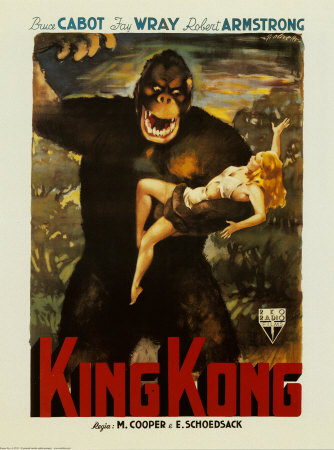
King Kong is viewed in the same “black” male dominating way. I’ve analyzed King Kong in a film class and realized how racial this film is. King Kong is a represented “black” male that has a sexual lust for a white female. The white female is viewed as an object the Kong and is fondled by the ape. She is powerless while Kong sniffs her and tears her clothing off. The sexual behavior in this film focuses on the race between the two male characters who are trying to fight over the women like a possession to be won.
The cartoon comic is depicting a male that has power over a woman and deceives her. The female character in this comic is a white female. Kipnis said that upper class females and males are more affected by dirty jokes. This joke is dim-witted and demeans women by stating at the bottom “Don’t Fall for This.” This not only degrades women but it also demonstrates how women don’t have power or common sense.
Penley discusses not only hierarchy, humiliation, and a trashy class; but how sexual roles and culture are formed and displayed throughout our culture. Sexual roles are created and reinforced by media. Ideas are formed about how males and females are supposed to act. Bert and Ernie defy sexual roles and expectations. Bert and Ernie are two males that live together in the same household on Sesame Street. Because they are defying cultural norms their sexuality has came into question. These are fictional characters that the public is starting to examine on a sexual level.
Lady Gaga is being questioned about her sexuality recently, which has currently become common in the recent years. I feel that Lady Gaga is being questioned more about her sexuality without any real cause because she is a woman. Yes, Adam Lambert is being questioned about his sexuality but that was only after he kissed a male dancer on a live show. Lady Gaga was being questioned by Barbara Walters.
Magnet discusses cyber feminism and how there are two types: cybertopian and cyberdystopian. The first one sees cyber sex as freedom of expression or liberation and the other one sees cyber sex as exploitation. Lady Gaga being questioned by Walters about her sexuality feels like exploitation of sexual information. Lady Gaga shouldn’t have been asked that because I feel that women are being seen more objectified lately to sell music. And the women are being more criticized and examined when it comes to sexual acts, performing, and sexual orientation.
These three reading really helped me understand how images of sexuality are viewed differently. The feminism gaze made me view some images differently in a sexual context.
Monday, January 11, 2010
1-13-10 objectification and empowerment


Youtube full video at http://www.youtube.com/watch?v=sDVB4881c2I

http://www.popculturepost.com/wp-content-uploads/2009/01/calvin-klien-ad-12909-1.jpg
Man Ray Trust (2004). From http://www.manrattryst.com/

Man Ray Trust (2004). From http://www.manrattryst.com/
Ludacris Chicken-n-Beer retrieved January 9, 2010.
http://abcnews.go.com/Business/story?id=7854000&page1 = Calvin K. video/article on abc.
From these multimedia images you can see how women are being objectified. Their bodies are being used to either sell sex and/or create assumptions of women. I chose these images because of the diversity of how women are being objectified, as objects or items to sell goods, and are being marketed. I chose a famous art piece, from Man Ray, which depicts a woman’s backside as an object, a violin. Depending on assumptions and one’s own opinions this women might be “empowered” sexually by being able to show her backside as art. But Dworkin would argue that she is being dehumanized and viewed as an object more than a human being. Man Ray’s art piece ties together the rest of the imagery I posted on this week’s blog.
The other images from Bacardi advertisements to Ludacris eating a woman’s leg like a piece of chicken can be argued in various ways. Dworkin would say that these images are objectifying the women making them into objects, giving males’ power over the subhuman women. McElroy believes that if the women in these advertisements had a “choice” in the matter about how to sell their bodies then women have the right as individuals to freely express their own body.
Dines and Jensen bring up this controversy of how different views of women’s rights vs. objectification and degrading to women are a major issue in Pornography in a Pornographic Culture. Dines and Jensen discuss the different kinds of feminist and their beliefs about women in porn and using their bodies sexually. These images in my blog are not porn but they are still shots of how women are being used in current media today. This kind of advertising and use of women affects everyone differently in our culture. We all come from different cultures where we have created our own belief systems, values, and perceptions.
In my own opinion I believe that Man Ray’s women artwork is demonstrating the empowerment of a woman’s body while objectifying her as a violin; if I were to see it in context of his other art at a museum though I would consider it to be more of an empowerment piece rather than an objectifying image. The Calvin Klien billboard advertisement shows how seductive a woman can be while sexually exposing her nude body. She is overpowering the men who are positioned below her, grabbing at her, as if she is desired as an object of lust. This billboard is harder to understand and that is why I included another reference about an ABC news segment they did. This segment is a video about how people on the street are reacting to the billboard.
Finally I perceive the Bacardi and Reebok shoe advertisements are objectifying and degrading the women as subhuman. Their bodies are being used to either stamp a brand on or to create a stereotype/ image other women have to live up to and/or achieve. These images make me angry and the true feminist comes out. I really dislike ads like these. But I believe the worst image of them all is the Ludacris cd cover. This cd cover is having the artist/rapper act like he is going to eat a woman’s leg like a chicken leg. This not only objectifies women but is also allows fans to see how to treat or respond to women as objects.
The images are perceived differently through the eye of the beholder. So you decide.
Subscribe to:
Posts (Atom)